The Pitfalls of Reason
Throughout my adult life I have brushed up against philosophical questions — in biology, in translation, in conversations with wise people. Yet I never had time to sit with some of them properly. Why did Paul Atreides see a mouse on the moon of his planet, while I see a face on ours? Why, in defiance of science, do people believe vaccines are harmful? What is wrong with us — what is wrong with this human reason of ours?
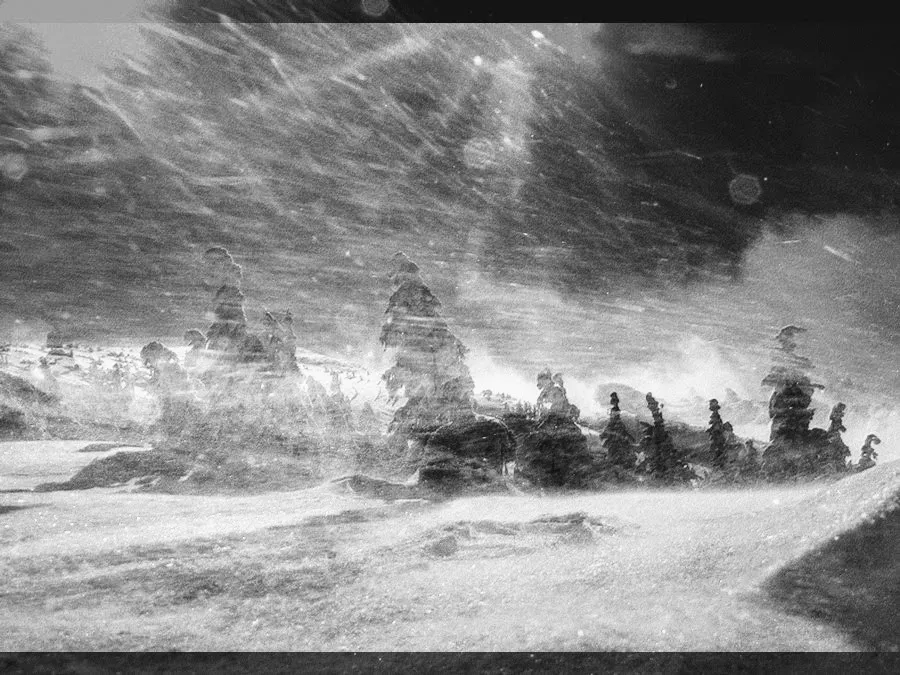 Fellowship of the Ring, aut.MISBetley, CC-BY-NC
We look, and we draw conclusions. But what we see is not always what truly exists — and what we think is often more a reflection of our habits than of reality.
The mind is comfortable as an old armchair — moulded to the shape of our habits. We like to think we look at the world objectively, that our senses and our reason are flawless instruments of cognition. But it is precisely they that lead us astray.
We see animals in the clouds, a face on the Moon, signs in random events; we hunt for patterns because our mind cannot abide chaos. It simplifies what is complex — from the whole scale of grey it picks out black or white. This is no accident: it is the unconscious inheritance of our nature. Illusions of this kind concern us all, whoever we are.
We carry within us the memories of what came before: the home we were raised in, the books that shaped us, the values we accepted before we ever learned to question. We look at the world through the prism of personal experience, unaware that we see it through a distorting mirror. These are individual illusions — private filters that alter the image of reality.
Then there is language — beautiful, but treacherous. We talk, yet we are not always speaking of the same thing. Words can be imprecise, freighted with accretions, mental shortcuts, stereotypes. We say god, honour, fatherland, as though these notions were self-evident, when in fact they mean different things in different mouths. In the marketplace of language — the forum of our everyday exchanges — it is easy to sell a word with no content inside, and hard to establish what we are really talking about.
And finally, the theatre — the home of grand narratives. We learn them from books, from lectures, from tradition. We accept ready-made scripts because it is easier — no need to think, someone has done that for us. We trust authorities, systems, doctrines, without asking who wrote these roles for us, or why. Such illusions are born of trust — or rather of blind submission to a script that absolves us of the troublesome need to think and to ask.
 Second Moon, aut. MISBetley, CC-BY-NC
Francis Bacon believed that becoming aware of these illusions was the first step toward truly knowing the world. So long as we remain sunk in the comfortable armchair of our habits, we see reality through the prism of personal experience and imprinted notions. To know the world as it is, we must stand up, step out of our comfort zone, and grapple with the four idols that pull the wool over our eyes.
Francis Bacon — a philosopher of the early modern era — was among the first to attempt to name these distortions. He described four principal kinds of illusion that creep imperceptibly into our cognition. He called them idols, for they have the force of false gods, in whom we believe more readily than in facts.
The Idols of the Tribe are errors that arise from the very nature of the human mind — we are inclined to simplify complex phenomena, because it is more convenient that way. We trust our senses, though we know they can fail us. The mind seeks order where there is none, and is reluctant to admit anything new.
The Idols of the Cave (that is, of the mind) arise from individual experience — each of us looks at the world differently, through the prism of upbringing, reading, milieu, opinions. What we see is filtered through a personal "cave.".
The Idols of the Marketplace are the snares of language. The name can mislead in any language, since the marketplace here stands for the forum where ideas are exchanged. We speak imprecisely, we use hollow words that obscure more than they explain. Language, instead of describing things, often imposes its own logic and blurs the boundaries of concepts.
The Idols of the Theatre are blind faith in authorities and ready-made systems. We accept them as we accept a play — script and all — without questioning, without checking, without thinking for ourselves.
These illusions are not the fault of the individual; they are inscribed in our very way of knowing the world. That is why Bacon insisted we need a method — rigorous, critical, grounded in experience.
A method that will slowly cleanse our cognition of these errors and bring us closer to reality as it is rather than as we imagine it to be.
Last 3 posts