Ile zostanie z Tezeusza (pl, en)
Paradoks Tezeusza: jeśli wymieniasz deski w statku Tezeusza jedną po drugiej, w którym momencie przestaje być statkiem Tezeusza? Czy tożsamość tkwi w materii, czy w ciągłości?
Czy książka napisana przez człowieka z pomocą AI jest dziełem człowieka? W którym momencie przestaje nim być? Czy AI może być autorem? A jeśli tak, to czy może być autorem dobrej książki beletrystycznej?
Książka wydawana przez wydawnictwo bez użycia AI przechodzi przez wiele rąk - redaktor, korekta, grafik. Nie pytamy wtedy o autora, choć czasem redakcja nanosi mnóstwo poprawek.
Kiedy na podstawie studiów bibliotecznych tworzymy powieść historyczną, też nikt nie pyta o jej autorstwo. Kiedy ktoś opowiada nam przy ognisku historię, która przydarzyła się jego ojcu, a my uznajemy to za znakomitą kanwę do napisania opowiadania - też nikt nie sugeruje, że to ten kompan przy ognisku je napisał.
Czy zatem autorem nie jest ten, który dostrzegł temat w tysiącu źródeł, wychwycił temat z opowieści snutej przy ognisku? A potem usiadł i zebrał to w całość, dodając od siebie przemyślenia lub zwroty akcji wynikające z jego własnego doświadczenia?
Świat jest pełen opowieści, ale zdolność ich przekazania innym jest tą umiejętnością, która tworzy Autora. Dlatego AI też może być autorem. Istota rzeczy nie leży w tym, kto jest autorem, tylko czy to jest dobra książka.
Jeśli AI napisze kiedyś dobrą powieść, chętnie ją przeczytam. Niestety na razie AI nie ma takich kompetencji, bo dobra powieść powinna unikać schematów, a sztuczna inteligencja działa wg schematów.
Wiem, wiem, mózg ludzki też działa wg schematów, ale różnica polega na tym, że ludzkie schematy są zakorzenione w ciele, emocjach, konkretnym życiu i dlatego są nieprzewidywalne. AI naśladuje różnorodność, ale za pomocą losowości. Ma w swej pamięci miriady dróg do wyboru i wzorców. Gdy ma zadecydować sama, wybiera najbardziej typowy, a gdy takiego nie ma, wybiera losowy, bo nie czuję żadnej presji, by wybrać konkretny. Żółty nie kojarzy mu się z nielubianą jajecznicą, czarny z pogrzebem, biały z wizytą u lekarza. To tylko kolory, mają taką samą wartość i ciężar. Dla AI. Ale nie dla człowieka.
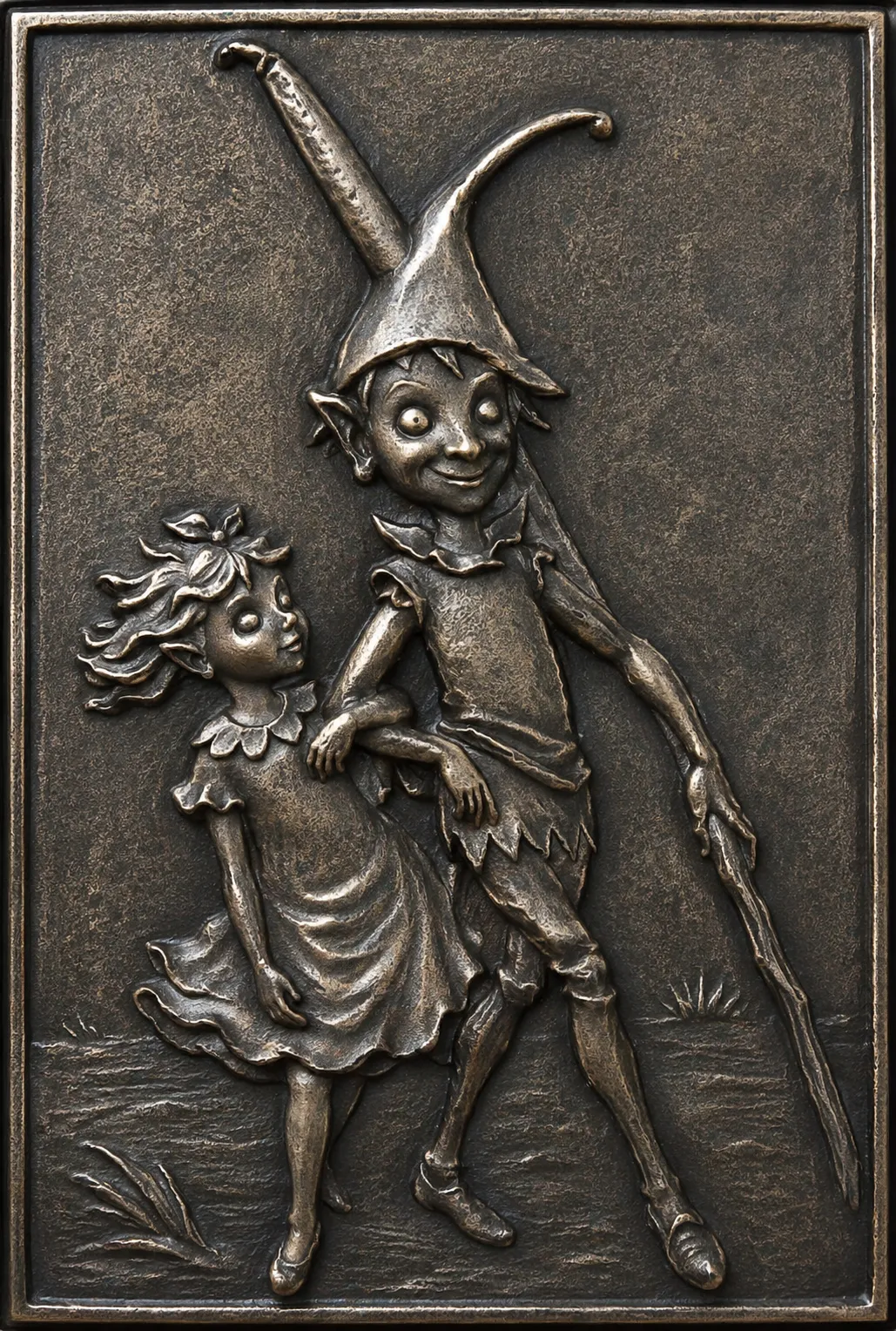
Wyobraźmy sobie dwójkę wędrowców: AI i człowieka. Idą polną, kamienistą drogą, mają przed sobą jeden cel: niedzielna msza w kościele.
AI ma umiejętność chodzenia obcykaną do imentu, człowiek takoż. Oboje potykają się o kamienie, AI przechodzi nad tym do porządku dziennego, bo ważny jest cel i to, żeby zdążyć do kościółka.
Człowiek po potknięciu przystaje, ogląda kamień, rzuca słowem obraźliwym, dostrzega, że to jednak nie kamień, ale skamieniała kość dinozaura, patrzy na oddalającą się AI i kość w rękach…
Dokonuje wyboru: zostawić kość, zabrać, skręcić do muzeum historii naturalnej, czy iść z kością do kościoła…. Setki możliwości. “Wezmę ją, jak będę wracał" decyduje.
Dogania towarzysza i zaczynają rozmowę.
- Co u ciebie?
- A idę sobie do kościoła. A u ciebie?
- Wiesz, okazuje się, że w czasach prehistorycznych żyły tu dinozaury. Były wielkie, świadczy o tym kość, którą znalazłem…
AI idzie do kościoła i dotrze na mszę. To jest sukces mierzalny, cel osiągnięty. Kamień był przeszkodą, przeszkoda ominięta, idziemy dalej. Człowiek też dotrze na mszę — ale będzie to już inny człowiek niż ten, który wyszedł z domu. Co go zmieniło?
Potknięcie. Nie drastycznie, nie od razu — ale gdzieś w jego środku siedzi teraz kość, siedzi decyzja "wezmę ją wracając", siedzi pytanie, czy wróci tą samą drogą, specjalnie, żeby kości nie przegapić... Czy ktoś inny ją znajdzie wcześniej.
Każdy z moich bohaterow napisze kiedyś opowiadanie pt. Msza. Zgadnij, które będzie ciekawsze.
EN
The Ship of Theseus: if you replace the planks of Theseus's ship one by one, at what point does it cease to be Theseus's ship? Does identity reside in matter, or in continuity?
Is a book written by a human with the help of AI a human work? At what point does it cease to be one? Can AI be an author? And if so, can it be the author of a good work of fiction?
A book published by a traditional publisher passes through many hands — editor, proofreader, graphic designer. Nobody questions authorship then, even when the edits are extensive.
When we write a historical novel on the basis of years of library research, nobody questions authorship either. When someone tells us a story around a campfire — something that happened to their father — and we recognise it as the perfect premise for a short story, nobody suggests that our companion by the fire wrote it.
Is the author not, then, the one who spotted the theme in a thousand sources, who caught the story in a tale told by firelight? And then sat down and gathered it all together, adding their own reflections, their own turns of plot born from their own experience?
The world is full of stories. But the ability to pass them on to others — that is the skill that makes an Author.
Which is why AI can be an author too. The real question is not who the author is, but whether it is a good book.
If AI ever writes a good novel, I will gladly read it. For now, though, AI lacks the necessary competence — because a good novel should avoid clichés, and artificial intelligence operates according to patterns. Yes, the human brain operates according to patterns too. But human patterns are rooted in the body, in emotions, in a particular life — and that is precisely what makes them unpredictable. AI imitates variety, but does so through randomness. It holds myriad paths and patterns in its memory. When left to decide for itself, it reaches for the most typical option — and when no typical option exists, it defaults to a random one, because it feels no pressure to choose any particular thing. Yellow does not remind it of a fried egg it once hated. Black does not remind it of a funeral. White does not remind it of a visit to the doctor. These are just colours, carrying equal weight and equal meaning. For AI. Not for a human being.
Imagine two travellers: an AI and a human. They are walking along a stony country road, with a single destination in mind: Sunday Mass.
Both have walking down to a fine art. Both stumble on the stones. The AI doesn't give it a second thought — what matters is the goal, and getting to church on time.
The human stumbles, stops, looks down at the stone, mutters something unprintable — and notices that it is not a stone at all, but a fossilised dinosaur bone. They glance at the AI disappearing ahead, then at the bone in their hands.
Leave it? Take it? Detour to the natural history museum? Walk into church carrying a dinosaur bone? A hundred possibilities. I'll pick it up on the way back, they decide.
They catch up with their companion and conversation begins.
— How are you? — Oh, just on my way to church. And you? — You know, it turns out dinosaurs lived here in prehistoric times. They were enormous — I found a bone to prove it...
The AI will reach Sunday Mass. Goal achieved, obstacle cleared, moving on.
The human will reach Sunday Mass too — but it will be a different person who walks through that door. What changed them?
A stumble. Nothing dramatic, nothing immediate — but somewhere inside them sits the bone now, sits the decision "I'll come back for it", sits the question of whether they'll return by the same road, whether someone else might find it first.
Each of my two characters will one day write a story called Sunday Mass.
I'll let you guess.